We evaluated big & tall office chairs across multiple brands, scoring each on weight capacity, ergonomic adjustability, seat dimensions, back height, lumbar support quality, and long-term commercial reliability. These are not sponsored picks or manufacturer recommendations — they are selections drawn from more than 30 years of outfitting offices with seating that must perform reliably under real-world commercial use. Each pick represents the product our specialists recommend most confidently in its use-case segment.
| Pick | Product | Seat Material | Back Height | Best For |
|---|---|---|---|---|
| Best Overall | Coolmesh Pro High Back Ergo Chair — PBD Furniture | Rugged Fabric | 45"H total | All-day ergonomic support |
| Best Value | 3D Mesh Back Covers for Nuve Chair — PBD Furniture | 3D Mesh | — | Nuve chair owners, mesh upgrade |
| Best Budget | Armless Task Chair — WFB Designs | Fabric | 40"H total | Light-duty seating tasks |
| Best Premium | Low Back Ergohuman Chair — Eurotech | Fabric/Mesh | 52"H total | Premium ergonomic all-day |
| Most Popular | Mesh Back Managers Chair — PBD Furniture | Mesh back | 43"H total | Managers, moderate use |
| Runner-Up | Mesh Seat & Back Task Chair with Headrest — WFB | Full Mesh | 23" seat H | Full-mesh all-day support |
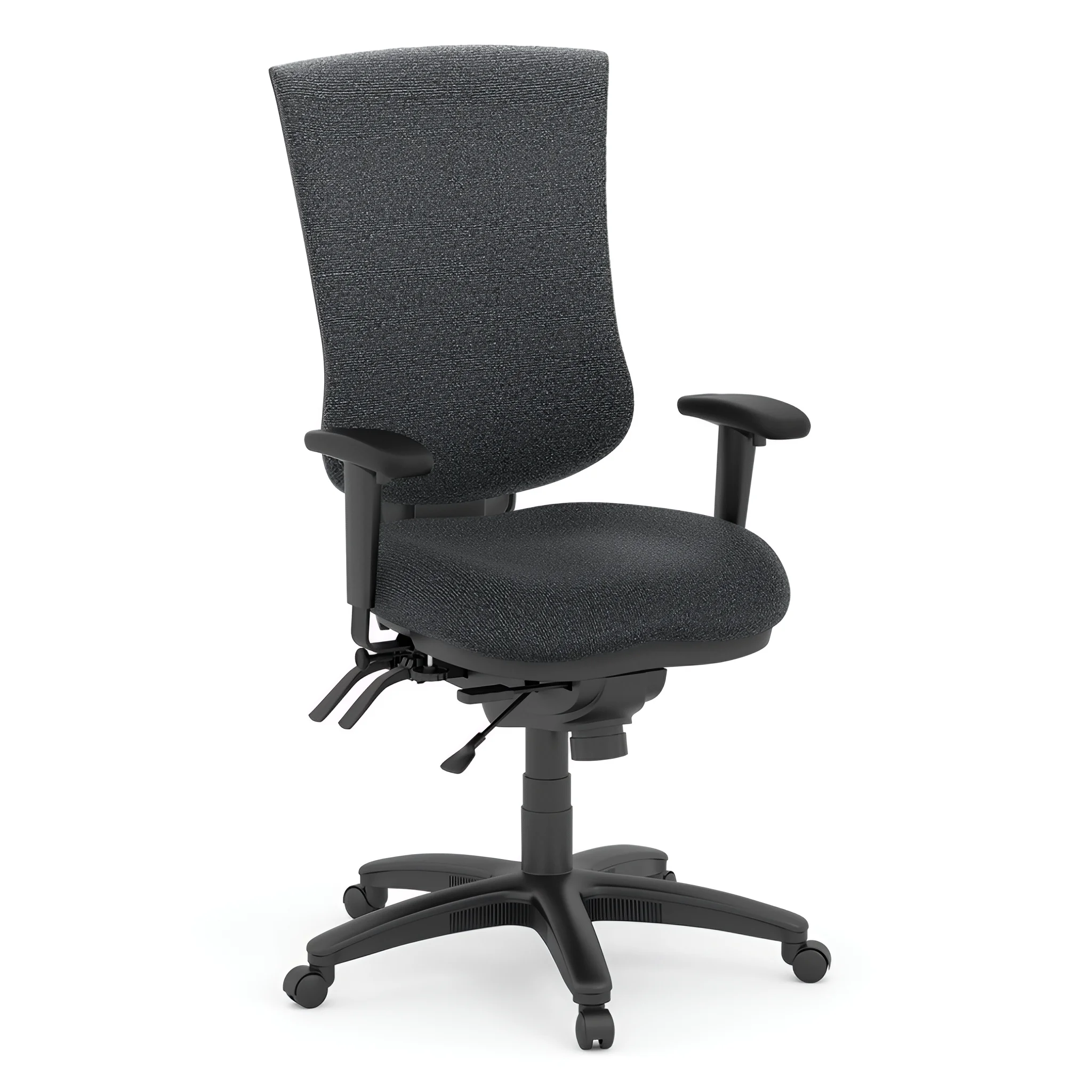
The PBD Cool Mesh Pro High Back Ergonomic Chair earns the Best Overall pick by delivering the combination of extreme adjustability and rugged-fabric durability that defines a chair appropriate for extended all-day sitting in a commercial environment. The “extreme adjustability” designation is not marketing language — it refers to the multi-point adjustment system that allows users to tune seat height, back angle, lumbar position, arm height, and tilt tension to their specific body proportions and posture preferences, which is the essential requirement for a chair that must accommodate diverse user sizes and sitting styles across a commercial office environment.
The rugged fabric seat and back is a deliberate upgrade over standard mesh in commercial seating: the dense woven fabric resists the edge wear, pilling, and snag damage that mesh backs accumulate in environments where the chair contacts hard surfaces, tools, or is used by multiple sitters in shift-work configurations. The high-back design provides full lumbar and thoracic support that a mid-back chair cannot, which is critical for taller sitters whose mid-back sits above a standard backrest. At 25 inches wide with a high back frame reaching 45 inches total, this chair accommodates a wider body range than standard commercial task chairs.
For offices that need a single all-purpose chair recommendation that performs reliably across diverse body types and full-day sitting requirements, the Coolmesh Pro is the specification that earns consistent confidence. Ships in five business days with free delivery and our Free Lifetime Warranty.
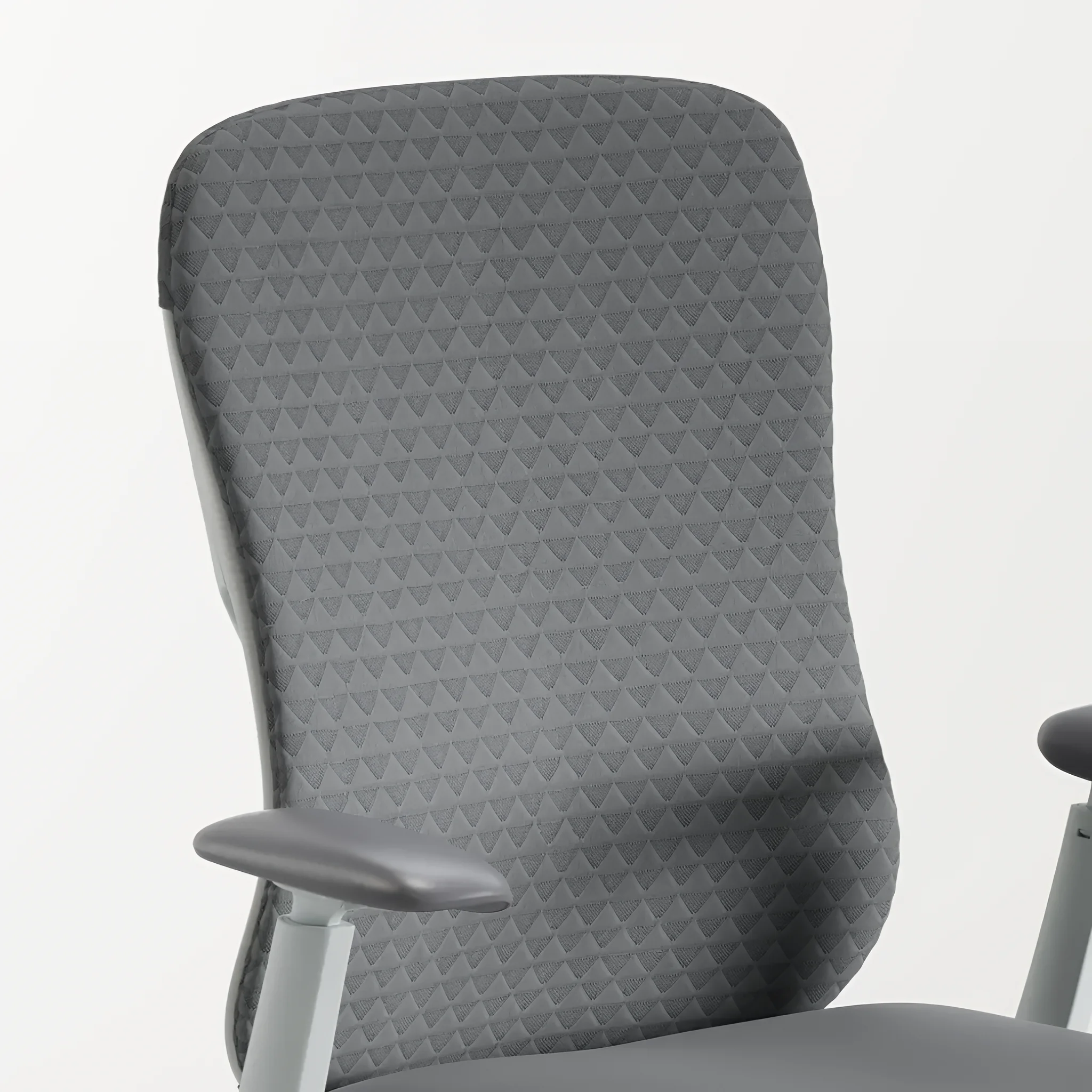
The PBD Nuve 3D Mesh Back Covers earn the Best Value designation as a targeted upgrade for existing Nuve chair owners who want to add mesh breathability and color customization to their current seating without replacing the entire chair. The Nuve chair's plastic back panel retains all of its ergonomic “moves with you” flexibility; the slip-on mesh cover adds a breathable 3D fabric layer over that panel, improving airflow against the user's back during extended sitting and providing a softer, more premium surface contact.
This type of accessory-level upgrade is particularly valuable in commercial environments where a fleet of Nuve chairs is already deployed and performing well ergonomically — replacing the entire chair to gain mesh breathability would be a significant unnecessary expenditure when the existing frame, mechanism, and base are sound. The slip-on installation requires no tools and takes minutes per chair, making it practical for facilities managers to upgrade a full office of chairs over a single afternoon.
Available in gray to coordinate with the most common commercial chair palette. Ships in five business days with free delivery and our Free Lifetime Warranty.
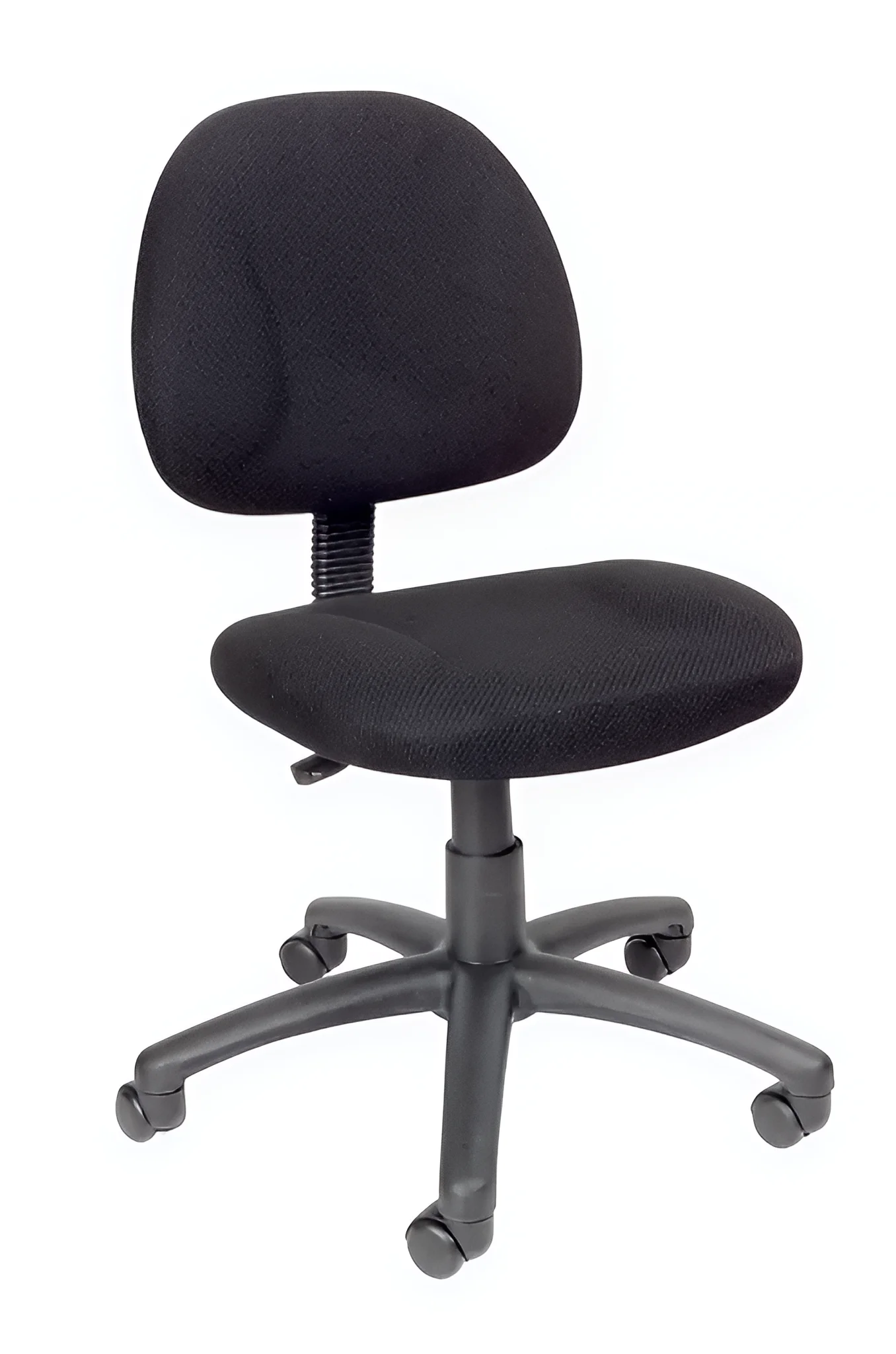
The WFB Designs Armless Task Chair earns the Best Budget pick for seating applications where the priority is a clean, professional-looking chair at a minimum footprint rather than all-day ergonomic support. Boss Seating — the manufacturer behind this model — specializes in commercial ergonomic office seating, and even their entry-level task chairs reflect that commercial design focus: proper pneumatic height adjustment, a stable five-star base, and upholstered surfaces that present professionally in any office environment.
The armless configuration serves two specific use cases: first, users who prefer a chair without fixed arms that may interfere with desk edge clearance or lateral movement; second, secondary and visitor seating positions around workstations, training rooms, and conference areas where a lightweight, space-efficient chair is the functional requirement. At 23 pounds, this is one of the lightest chairs in this guide — easy to move, stack in training configurations, and store when not in use.
For offices that need clean, professional secondary seating at a modest cost per unit — training rooms, secondary workstations, breakout areas, and overflow conference seating — this WFB Designs task chair is the reliable, no-frills solution. Ships in five business days with free delivery and our Free Lifetime Warranty.
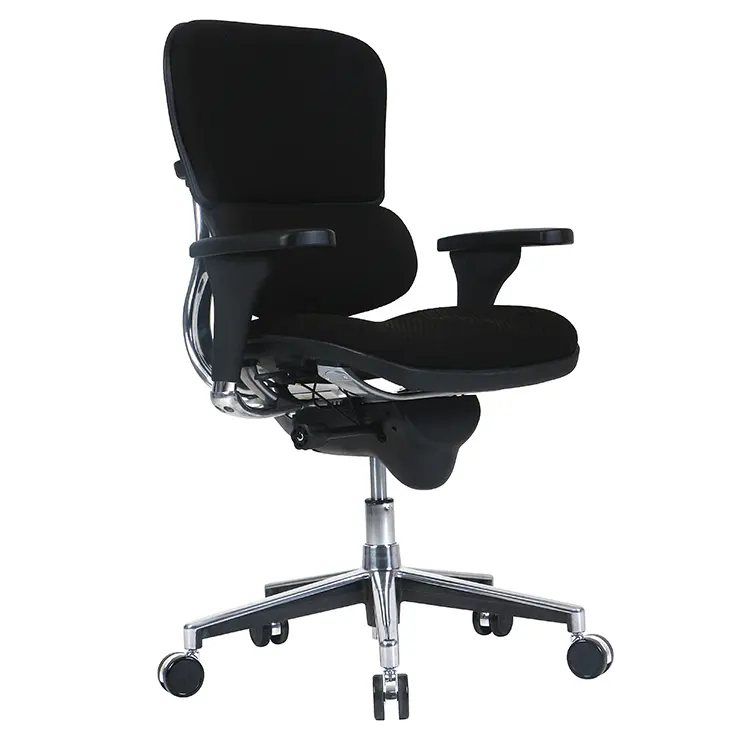
The Eurotech Ergohuman Low Back Chair is the Best Premium pick because it represents the category of engineered seating — minutely adjustable, form-and-function merged design — that commercial ergonomics specialists recommend for users who sit for six or more hours daily and experience back discomfort in standard commercial task chairs. Eurotech's Ergo chairs are engineered from the posture science out, with adjustment systems that allow the seat, back, lumbar, and arm positions to be dialed to each user's specific anthropometric measurements rather than approximated from a medium-body default.
At 66 pounds, the Ergohuman is among the heaviest chairs in this guide — a reflection of the substantial metal mechanism, dense foam seat, and commercial-grade materials that distinguish genuine ergonomic seating from aesthetically similar but mechanically inferior alternatives. The 26-inch seat width is wider than the commercial task chair standard, providing lateral freedom of movement for larger-framed users. The low back configuration, despite its name, still provides thorough lumbar support — the “low back” refers to the back height relative to the Ergohuman's high-back variant, not to a reduction in lumbar coverage.
For executives, senior professionals, and any user for whom seating comfort directly impacts daily productivity and physical wellbeing, the Eurotech Ergohuman is the premium specification that delivers on its ergonomic claims. Ships in five business days with free delivery and our Free Lifetime Warranty.
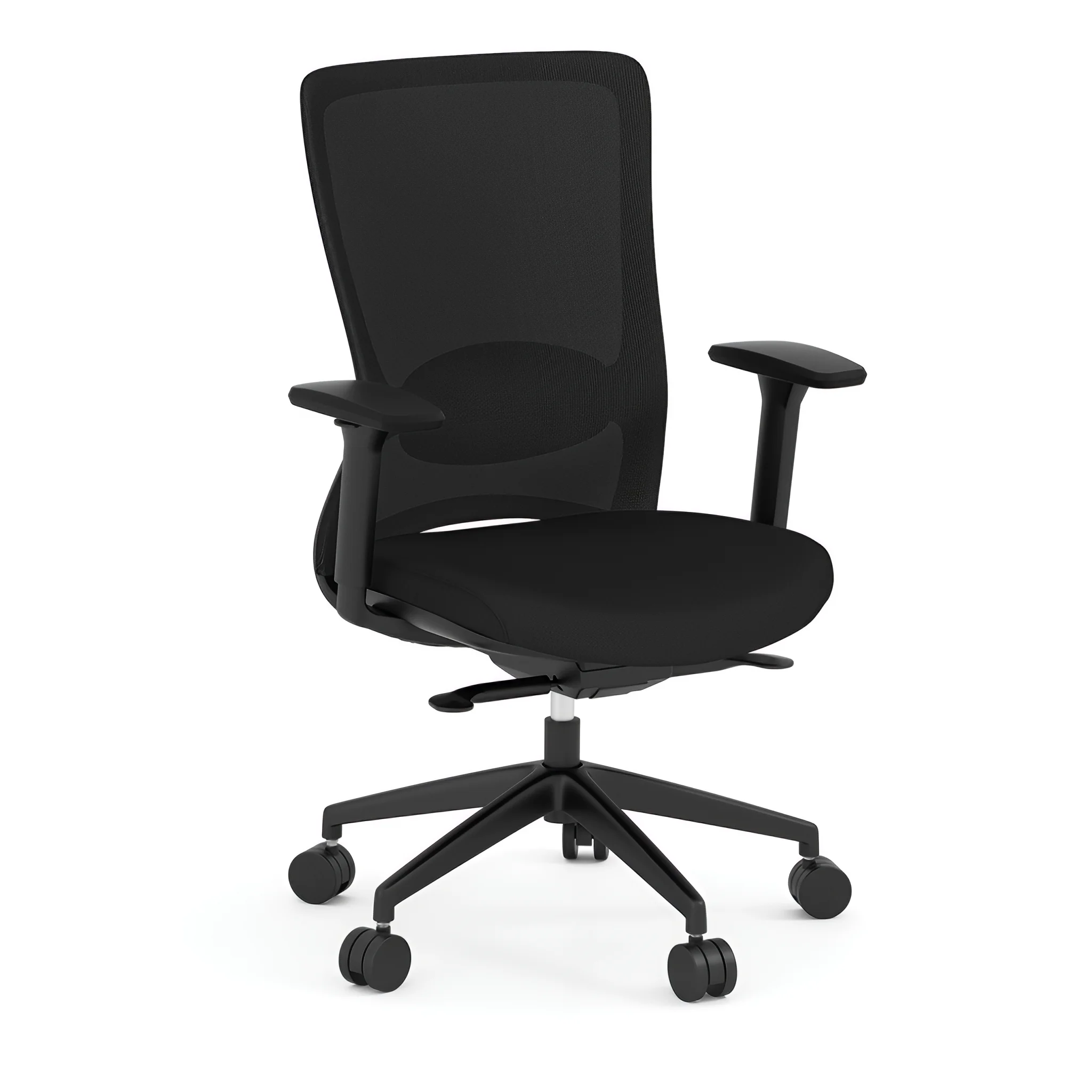
The PBD Astra Collection Mesh Back Managers Chair is the Most Popular pick because it hits the commercial seating sweet spot — breathable mesh back for all-day temperature regulation, a 26-inch wide seat accommodating a broader range of body types, and a contemporary mid-century-influenced aesthetic that reads as modern and deliberate rather than generic. The mesh back is one of the most-requested features in modern office chairs: it provides the temperature and airflow management that foam-upholstered backs cannot, which becomes increasingly important during extended sitting in climate-controlled environments.
At 34 pounds, this is a lighter chair than the full ergonomic models in this guide — a reflection of the mesh construction rather than a reduction in structural quality. The mid-back configuration works for the majority of commercial users whose thoracic height falls within the standard range; users over 6'2" may find the high-back Coolmesh Pro a better fit for full upper-back coverage. The Astra's broad appeal comes from its combination of visual refinement and practical comfort for standard business-hours sitting.
For managers, directors, and any professional role that demands a chair that looks intentional and supports all-day work without the full ergonomic chair investment, the Astra Managers Chair is the consistent choice. Ships in five business days with free delivery and our Free Lifetime Warranty.
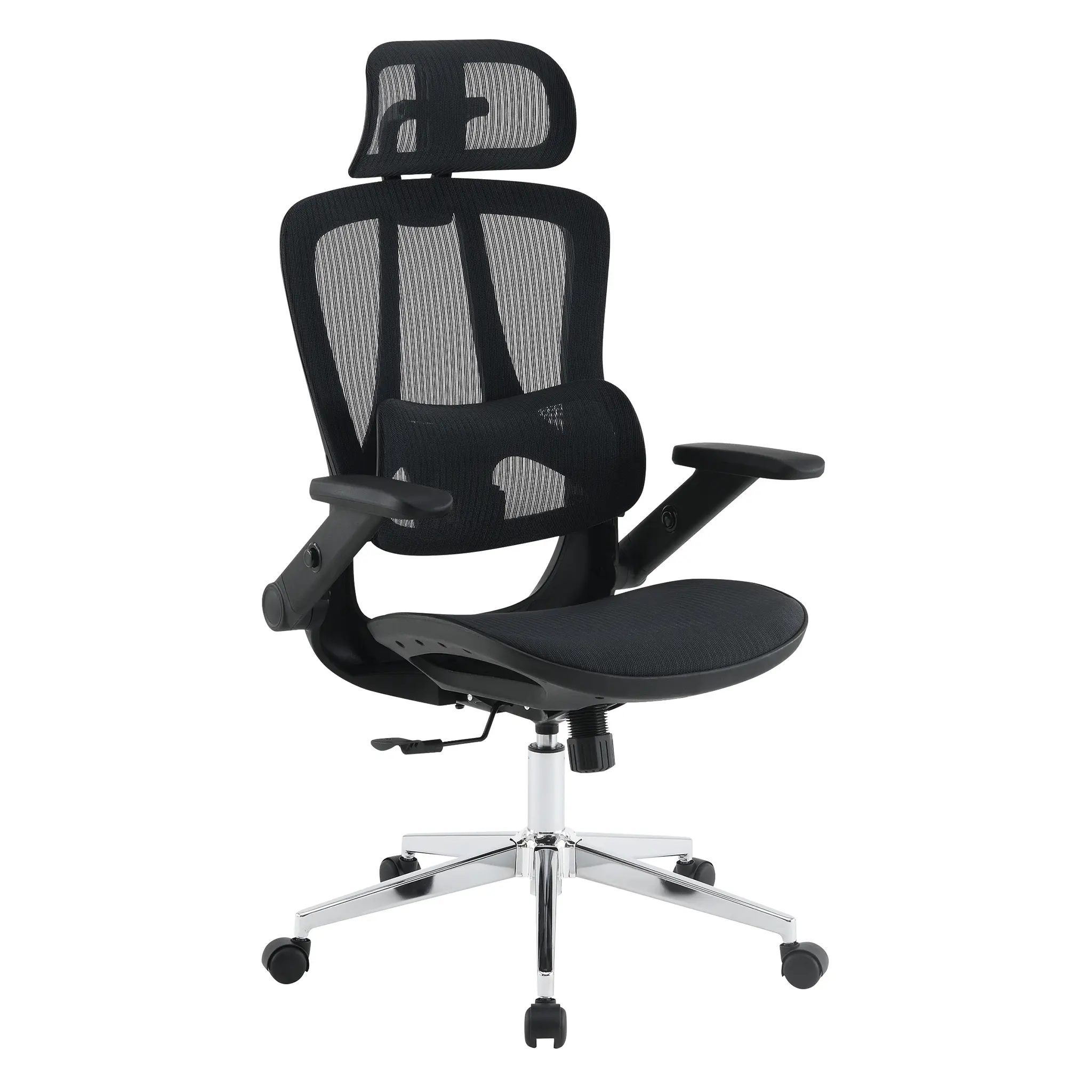
The WFB Designs Helena Collection Full-Mesh Task Chair with Headrest is the Runner-Up because it adds two features that are difficult to find at this price point in a full-mesh commercial chair: a headrest and 4D adjustable flip arms. The headrest is the key ergonomic differentiator — it supports the head and neck during extended working sessions and reclined postures, reducing cervical tension that accumulates over long working days. The self-adjusting lumbar system adapts to the user's spinal curvature during movement rather than requiring manual repositioning throughout the day.
The full-mesh construction — both seat and back — maximizes airflow and thermal regulation across the entire contact surface, making this the most breathable chair in this guide. The thick padded 4D flip arms allow adjustment in four dimensions — height, width, depth, and pivot — providing precise arm positioning for different task types and eliminating the fixed-arm interference that can restrict desk edge access or lateral movement. At 26 inches wide, the seat provides the generous lateral room that differentiates big & tall seating from standard commercial task chairs.
For users who prioritize maximum breathability and headrest support in their all-day seating, and want a commercially appropriate aesthetic alongside those functional specifications, this Helena chair is the specification to consider. Ships in five business days with free delivery and our Free Lifetime Warranty.
Standard commercial task chairs are 17–19 inches wide at the seat. Big & tall specifications typically begin at 22 inches and extend to 26+ inches. If standard chairs feel laterally constrictive — if the seat pan contacts the hips or thighs during normal sitting — a wider seat is the correct solution before adjusting any other parameter. Seat depth should allow the user to sit with full back contact against the backrest while still having 2–3 inches of clearance behind the knees. Adjustable seat depth is the most effective solution for users whose leg length deviates significantly from the medium-body standard.
The backrest height determines how much of the spine receives direct support. Mid-back chairs (ending at roughly shoulder blade level) are appropriate for standard body heights. High-back chairs extend to the upper shoulder or headrest level and are recommended for taller users (6'1" and above) and users who experience upper-back or shoulder tension during extended sitting. Lumbar support should contact the lumbar curve — typically 3–6 inches above the seat pan — not the mid-back or sacrum. Adjustable lumbar height is the most reliable way to ensure correct alignment across diverse user heights.
A synchro-tilt mechanism — where the seat and back tilt in a coordinated ratio — is the minimum mechanism standard for all-day commercial seating. Basic tilt mechanisms that tilt only the back while the seat remains fixed create a posture that stresses the lumbar and hip flexors during reclined positions. Look for tilt tension adjustment (controls how much force is required to recline), tilt lock (holds the chair in a specific recline position), and seat height adjustment across a range that accommodates your leg length at your desk height.
Armrests serve a specific ergonomic function: they support the weight of the arms and reduce shoulder load during tasks that do not require the arms to reach forward. For keyboard-intensive work, arms should rest at elbow height with forearms roughly parallel to the desk surface. Fixed-height arms that are too high force the shoulders to elevate; arms that are too low provide no support. Adjustable arms — particularly 4D models that adjust in height, width, depth, and pivot — are the most versatile for commercial environments where multiple users may share a chair or where task types vary throughout the day.
Mesh back chairs ventilate significantly better than foam-upholstered backs during extended sitting, reducing the thermal build-up that contributes to fatigue and discomfort. Full-mesh chairs (mesh seat and back) provide maximum breathability but may feel firmer than foam-seat alternatives. For environments with consistently high room temperatures, or users who experience significant thermal discomfort in standard chairs, a mesh back at minimum — or full mesh construction — is the right specification.
Most standard commercial task chairs are rated to 250–275 lbs. Big & tall chairs typically begin at 300 lbs and extend to 400–500 lbs for heavy-duty specifications. The weight capacity rating reflects the entire structural system — base, cylinder, mechanism, and frame — not just the seat. When specifying chairs for users near or above a chair's rated capacity, select a chair with at least 50 lbs of rated capacity above the user's actual weight to ensure both safety and long-term structural integrity. Do not assume chairs without a published weight rating meet standard commercial specifications — the rating should always be confirmed before purchase.
If a standard 17–19 inch seat width feels laterally constrictive — if the seat contacts the hips or thighs — move to a chair with 22 inches minimum seat width. Most chairs described as big & tall begin at 22–24 inches. Full-width big & tall specifications reach 26–28 inches. The test is simple: in a correctly sized seat, there should be no hip or thigh contact with the seat edges, and the user should be able to shift laterally without resistance. Choosing too narrow a seat creates sustained lateral pressure on soft tissue that contributes to fatigue and discomfort even in a well-adjusted chair.
A mid-back chair's backrest reaches approximately to the shoulder blade level (roughly 20–22 inches above the seat pan). A high-back chair extends to the upper shoulder or beyond, sometimes including a headrest. For users under 6'0", a mid-back chair typically provides adequate thoracic support when lumbar height is correctly adjusted. For users 6'1" and taller, the mid-back's top edge often falls below the thoracic spine during normal sitting, providing no upper-back support for the portion of the back most prone to tension during desk work. High-back chairs are the correct specification for taller users in any extended-sitting application.
Yes, with appropriate adjustment. The wider seat of a big & tall chair is not a disadvantage for standard-sized users — most users find a slightly wider seat comfortable and non-restrictive. The primary adjustment concern is seat height and lumbar position: a big & tall chair configured for a 6'4" user will typically be set too high for a 5'6" user, and lumbar position will need to be re-established. If chairs are shared between users who differ significantly in height, adjustable lumbar height is the most important feature to look for — it allows each user to correctly position the lumbar support for their individual spinal curvature without tools or extended adjustment procedures.
A commercial-grade office chair used by a single user in a standard business-hours environment should last 7–12 years before mechanism wear, foam compression, or fabric degradation requires replacement. Chairs used in multi-shift or heavy-use environments have shorter practical lifespans of 4–7 years. The components that typically fail first are the pneumatic cylinder (supporting height adjustment), arm pad materials (cracking or flaking), and foam seat compression. A chair that has become significantly shorter in height during the day — indicating cylinder failure — or whose seat has lost cushioning depth should be replaced regardless of appearance. Our Free Lifetime Warranty covers manufacturer defects throughout the chair's commercial service life.