We evaluated cafeteria and breakroom tables across multiple brands, scoring each on surface durability, base stability, seating capacity relative to footprint, ease of cleaning, and long-term commercial reliability. These are not sponsored picks or manufacturer recommendations — they are selections drawn from more than 30 years of outfitting employee dining areas, breakrooms, and multi-purpose spaces of every size and use pattern. Each pick represents the product our specialists recommend most confidently in its use-case segment.
| Pick | Product | Size | Style | Best For |
|---|---|---|---|---|
| Best Overall | 30x72 Cafeteria Table — PBD Furniture | 72"W x 30"D | Rectangular / standard height | Corporate cafeterias |
| Best Value | 30in Round Pedestal Table — KFI Studios | 30" diameter | Round / standard height | Flexible breakroom seating |
| Best Budget | 30in Square Pedestal Table — KFI Studios | 30"W x 30"D | Square / standard height | Compact dining areas |
| Best Premium | 36in Square Bistro Table with Stools — KFI | 36"W x 41"H | Square / counter height + seating | Modern café-style spaces |
| Most Popular | 30in Round Café Height Table — Corp Design | 30" diameter / 42"H | Round / café height | Contemporary breakrooms |
| Runner-Up | 30x60 Cafeteria Table — PBD Furniture | 60"W x 30"D | Rectangular / standard height | Medium breakroom spaces |
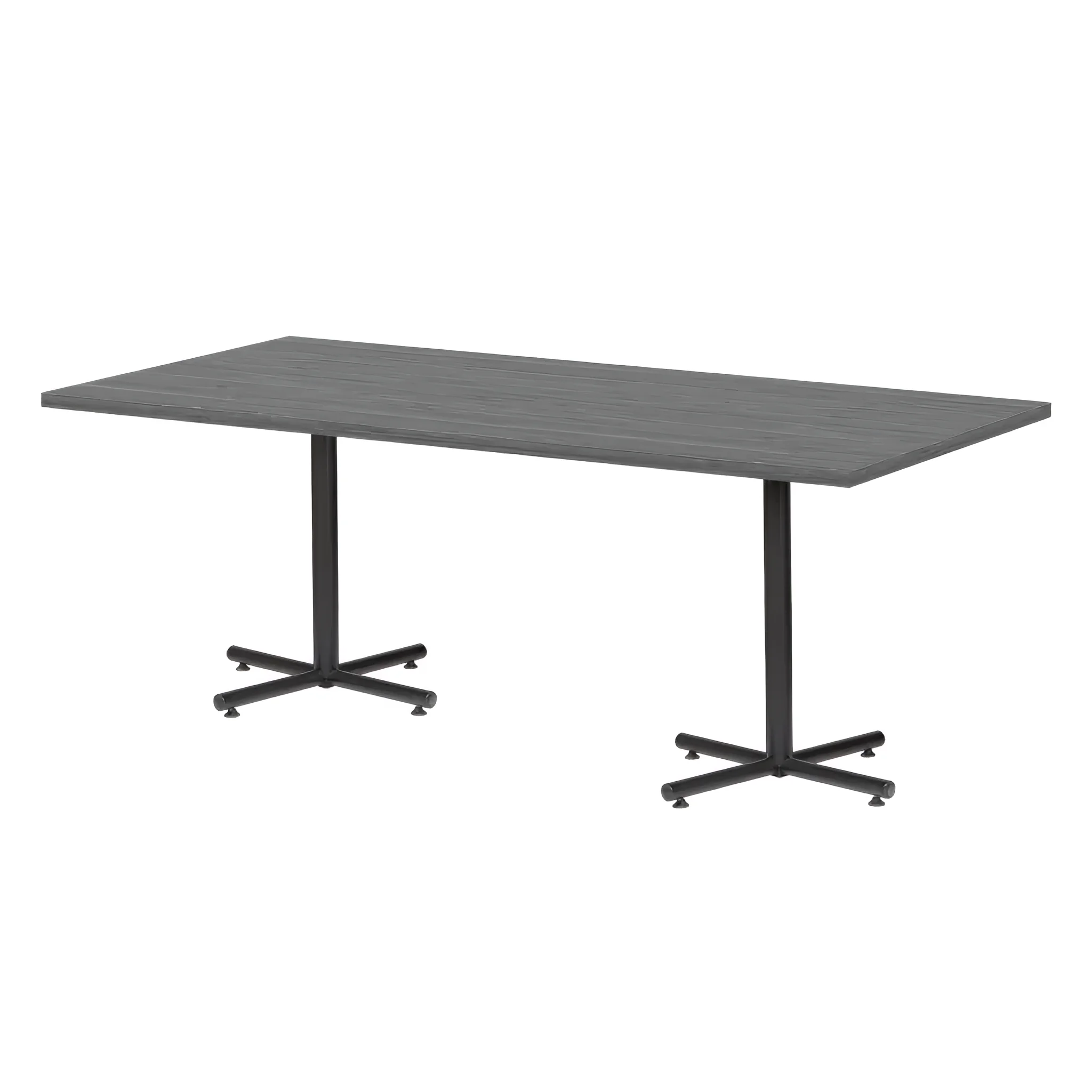
The PBD Block Street 72-inch Cafeteria Table earns the Best Overall pick by combining every feature that matters in a commercial dining environment: thermally fused melamine laminate that resists spills, heat, and daily food contact, 3 mil PVC Tough Edge banding that protects the perimeter against the impact of chairs and serving carts, and a metal X-base with adjustable leveling glides that keep the table stable on the slightly uneven floors common in cafeteria and breakroom spaces. At 72 inches long, this is the standard cafeteria table length that seats four to six people comfortably depending on chair width.
The Newport Gray finish is a contemporary commercial neutral that coordinates naturally with virtually any existing breakroom palette and resists showing the food residue and minor staining that accumulates on darker finishes in daily dining environments. The thermally fused melamine surface is the critical specification here: unlike paper-applied laminates, TFM bonds at the substrate level and does not delaminate or bubble under the repeated exposure to moisture, cleaning chemicals, and hot beverages that characterize commercial breakroom use.
At 97 pounds, this table is heavy enough to feel stable during daily use and light enough for facilities staff to reposition for room setup changes. Available in multiple finish options to coordinate with your breakroom environment. Ships in five business days with free delivery and our Free Lifetime Warranty.
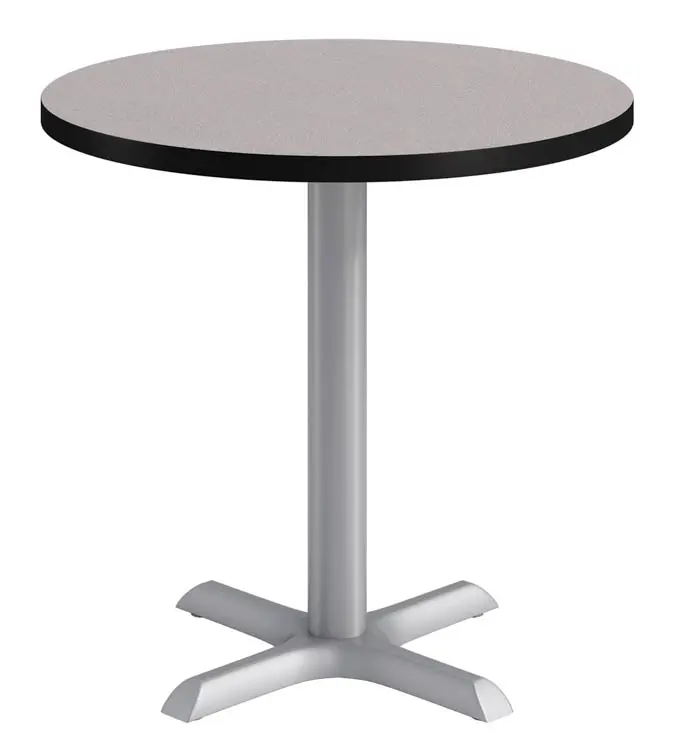
The KFI Studios 30-inch Round Pedestal Table is the Best Value pick because it delivers cast-iron pedestal base construction — a commercial-grade base material that far outlasts steel stamped or plastic-footed alternatives — with a 1.25-inch high-pressure laminate surface and T-Mold edge treatment at a price that makes buying four to six units for a breakroom entirely practical. The round configuration maximizes seating flexibility: at 30 inches in diameter, this table seats two to three people comfortably and tucks into corners and against walls without wasted space.
High-pressure laminate (HPL) is the surface standard for commercial dining environments precisely because it was designed to resist the combination of moisture, impact, heat, and chemical cleaning that tabletops in these spaces endure daily. The T-Mold edge is the commercial alternative to PVC banding for round and curved table edges, providing the same protective function in a form that works with the table's circular perimeter. The cast-iron base with a 1.5-inch steel column provides the pedestal stability that round tables require — no four-leg wobble, and no table-tip risk from uneven weight distribution.
For breakrooms that need flexible, reconfigurable seating — where tables are pushed together for group lunches and separated for individual use throughout the day — round pedestal tables in this size range are the most versatile option available. Ships in five business days with free delivery and our Free Lifetime Warranty.
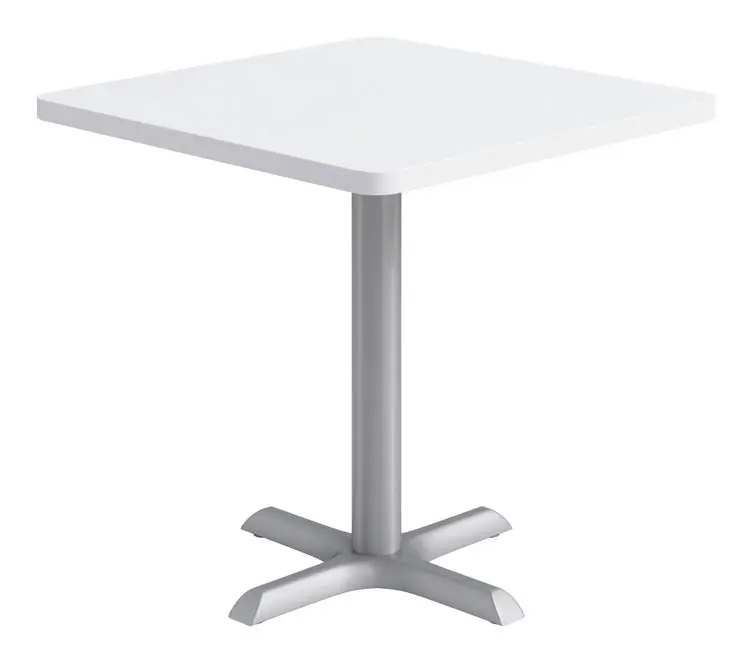
The KFI Studios 30-inch Square Pedestal Table earns the Best Budget pick because it applies the same cast-iron base and high-pressure laminate surface as the round model above in a square footprint that fits more neatly against walls and in corner configurations. For compact breakrooms where space efficiency is the primary constraint, a square pedestal table seats the same two to three people as a round of equivalent size while occupying a more predictable rectangular footprint that fits flush against walls and window lines.
The Designer White finish is the most neutral and space-expanding option in the KFI pedestal line — white surfaces reflect light and make small breakrooms and dining areas feel more open than darker laminate finishes. The high-pressure laminate construction handles daily food-and-beverage contact, cleaning chemicals, and the scuffs and impacts of chairs being pulled in and pushed out dozens of times each day. At 61 pounds, this table is light enough for daily repositioning by a single facilities team member.
For organizations equipping small breakrooms, touchdown eating areas in open-plan offices, or satellite offices where a full cafeteria setup would be oversized, this KFI square pedestal table provides genuine commercial-grade dining surface quality at a price that allows multiple units without budget strain. Ships in five business days with free delivery and our Free Lifetime Warranty.
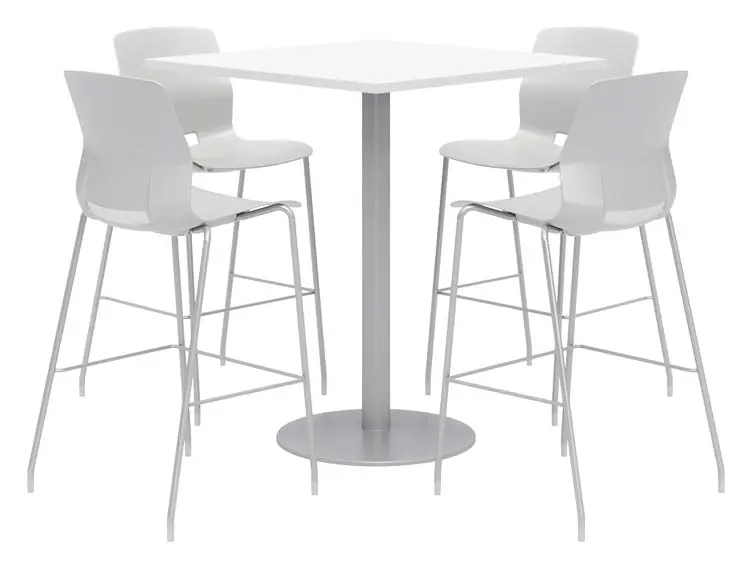
The KFI Lola 36-inch Square Bistro Table with 4 Stools is the Best Premium pick because it delivers the complete café-height dining solution that modern corporate breakrooms, employee lounges, and hospitality-inspired office environments demand. Counter-height bistro configurations have replaced standard-height dining tables in many contemporary workplace designs precisely because they create a more dynamic, social dining environment — the slightly elevated seating posture encourages shorter, more energized breaks rather than prolonged seated dining that can delay return to work.
The Lola collection is designed for exactly this dual-purpose role: it functions as a dining space during meal periods and as an informal collaboration or laptop-working zone at other times. The table-and-stool set eliminates the coordination problem of sourcing compatible counter-height seating separately — the KFI stools are designed proportionally for this table height and finish palette. At 145 pounds for the complete set, the combination is substantial and stable.
For organizations creating modern employee amenity spaces, café-style lounge areas, or hospitality-forward breakrooms that signal investment in the employee experience, this KFI bistro set is the specification-ready solution. The complete set ships in seven business days with free delivery and our Free Lifetime Warranty.
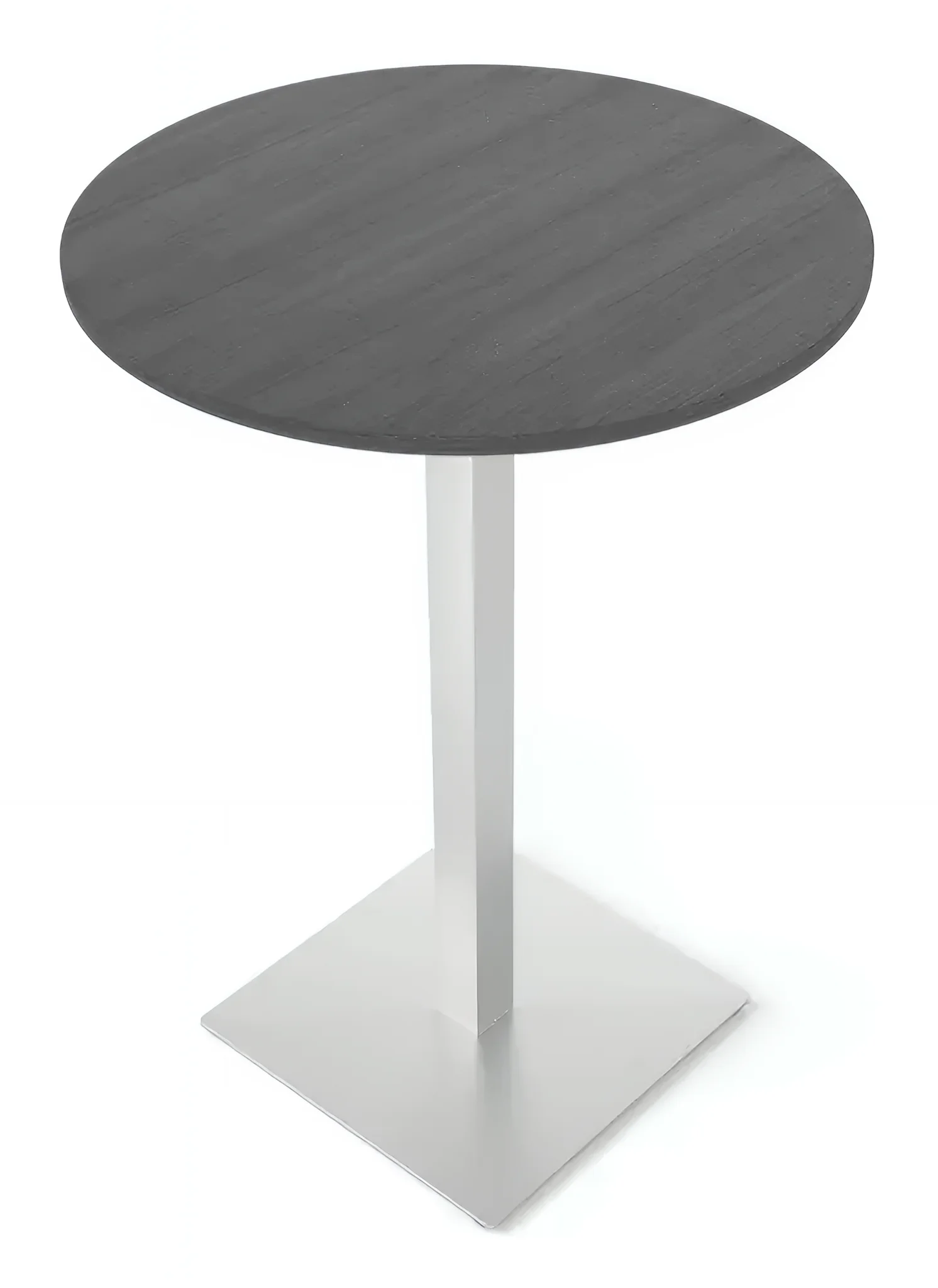
The Corp Design 30-inch Round Café Height Table is the Most Popular pick because it combines the two attributes office specifiers request most in contemporary breakroom tables: café height (42 inches) and a brushed stainless steel base. The café height configuration creates a standing-adjacent social dynamic that works exceptionally well for brief social dining interactions and informal catch-up conversations that do not require a full seated lunch environment. The square brushed stainless base is a premium base specification that gives this table a hospitality aesthetic far beyond the typical commercial cafeteria look.
The Weatherwood Gray laminate top is a textured, dimensional finish that reads as contemporary and residential-influenced — the type of finish that transforms a utilitarian breakroom into a space employees choose to spend time in rather than merely eat in. At 30 inches in diameter, the round top seats two comfortably and three in a pinch, making this the right social dining scale for a modern open-plan office environment where breaks are structured around small groups rather than full team dining.
Available in several finish options to match your breakroom interior. This table pairs naturally with bar-height stools for a complete café-station setup. Ships in seven business days with free delivery and our Free Lifetime Warranty.
The PBD Block Street 60-inch Cafeteria Table is the Runner-Up for the same reason the 72-inch model earns Best Overall: identical commercial-grade thermally fused melamine construction, 3 mil PVC Tough Edge, and leveling X-base, in a more compact 60-inch length that fits breakrooms and dining areas where the full 72-inch model would restrict traffic flow or limit table count. At 85 pounds — 12 pounds lighter than the 72-inch model — it is easier to reposition for room configurations while maintaining the same substantive construction.
The 60-inch length seats four comfortably at standard dining chair spacing, making it the right specification for smaller employee groups, satellite offices, and breakrooms where six-person dining capacity would rarely be used. This size also works well in multi-purpose training and meeting spaces where the tables need to function as both dining surfaces and meeting tables at different times of day — the commercial construction handles both roles without issue.
Like the 72-inch model, the 60-inch Block Street table is available in multiple finish options for color coordination with existing breakroom furnishings. Ships in five business days with free delivery and our Free Lifetime Warranty.
Cafeteria tables are subjected to daily food and beverage contact, spills, cleaning chemicals, and the constant impact of trays, dishes, and utensils being placed and removed. Thermally fused melamine (TFM) and high-pressure laminate (HPL) are the two appropriate surface materials for commercial dining use. Both resist moisture penetration and chemical damage better than standard laminate finishes. Avoid tables with standard paper laminate surfaces in commercial dining environments — they will show delamination and bubbling within one to two years of continuous use.
The base determines whether a cafeteria table stays stable under the shifting weight distribution of multiple diners moving, leaning, and repositioning. X-base configurations distribute weight across a wide footprint without individual leg placement concerns. Pedestal bases require cast-iron or heavy steel construction to avoid tip risk on round and square tables. Four-leg configurations with floor levelers provide the most stable option for rectangular tables and allow leveling on uneven floors.
Standard height (29–30 inches) pairs with standard dining chairs and is the correct specification for traditional cafeteria and breakroom dining. Counter height (34–36 inches) and café height (42 inches) pair with bar stools and create a more informal, social dining posture. Café height is increasingly popular in contemporary corporate environments because it supports shorter, more energized breaks and doubles as an informal meeting or laptop surface. Do not mix heights without intentional zoning — a cafeteria with both standard and café-height tables looks unplanned rather than purposefully varied.
Commercial cafeteria tables should clean completely with standard food-service cleaning products — quaternary ammonium compounds, diluted bleach solutions, or commercial kitchen sanitizers. Thermally fused and HPL surfaces handle this chemical exposure without surface degradation. Avoid tables with wood veneer, fabric accents, or unsealed edges in dining environments — these surfaces absorb cleaning chemicals and food residue over time, creating hygiene concerns that are expensive to address without furniture replacement.
Plan cafeteria seating at 18–24 inches of table length per diner for comfortable standard dining, or 20–24 inches per stool position at counter-height configurations. A 72-inch rectangular table seats 4–6 at standard spacing. A 30-inch round table seats 2–3. Leave 36 inches minimum between occupied table edges and walls, and 42–48 inches between table rows where traffic needs to pass behind seated diners. These clearances prevent the crowded, uncomfortable dining environment that drives employees to eat at their desks.
Cafeteria tables are designed for food and beverage contact, with surface treatments and edge protection appropriate for spills, cleaning chemicals, and daily dining use. Training tables are designed for document and laptop work in classroom or meeting configurations, and may prioritize surface size and folding/nesting capability over food-contact durability. In practice, a high-quality cafeteria table with thermally fused laminate or HPL surface can function as a training table without issue. The reverse — using a training table in a cafeteria role — is less ideal because training table surfaces and edges are not always rated for regular food and chemical exposure.
Standard cafeteria table height is 29–30 inches, which pairs with standard-height dining chairs and is the most common specification for traditional breakrooms and cafeterias. Counter height (34–36 inches) requires counter-height stools and creates a more informal, bar-style dining environment appropriate for contemporary employee lounge areas. Café height (42 inches) is the tallest standing-adjacent option, pairs with tall bar stools, and is most appropriate for social, brief-break oriented spaces rather than extended seated dining. Choose the height based on the primary use pattern — if employees take full lunch breaks seated, standard height is correct; if the space is designed for short social breaks, café height works well.
A 72-inch rectangular cafeteria table comfortably seats 4 people at a generous 18 inches per seat on each long side, for a total of 6 (3 per side with 2 end seats if accessible). At a tighter 14–15 inches per seat — appropriate for cafeteria trays — you can seat 4 per side plus ends for up to 10 in a tight cafeteria configuration, though this is not recommended for regular dining use. The standard commercial planning number is 4–6 people for a 72-inch table at comfortable spacing. The 60-inch model seats 4 comfortably.
Standard height cafeteria tables at 29–30 inches meet ADA requirements for accessible dining surface height (28–34 inches). For full ADA compliance, accessible seating positions must provide a minimum 27-inch knee clearance height, 30-inch wide knee space, and 19-inch depth under the table edge. X-base and pedestal base tables generally provide better knee clearance at accessible positions than four-leg configurations, where legs at the table corners can obstruct wheelchair access. When planning cafeteria seating for ADA compliance, allocate a minimum 5% of dining positions as accessible, with adequate clear floor space for wheelchair positioning.
Thermally fused melamine (TFM) surfaces are best cleaned with a damp cloth and mild soap for routine cleaning, or commercial food-service sanitizer for disinfection. The surface resists standard quaternary ammonium cleaners, diluted bleach solutions (up to 1:10 bleach/water), and commercial degreasers without damage. Avoid abrasive scrubbing pads, which can dull the surface finish over time. For dried food residue, a warm wet cloth left on the surface for 30–60 seconds softens the residue before wiping. TFM surfaces do not require waxing or surface treatment — the factory finish is permanent and does not need restoration.